Is your ideal Tiburon home down on the water with a dock and a short stroll to the ferry, or perched on a sunny slope with sweeping San Francisco views and added privacy? It is a real tradeoff, and the right answer depends on how you live day to day. You want confidence that your choice fits your routine, your risk comfort, and your long-term plans. This guide breaks down lifestyle, climate, access, pricing, and key due diligence so you can decide with clarity. Let’s dive in.
Waterfront vs hillside basics
On the Tiburon peninsula, “waterfront” generally means the flats and shoreline areas along Richardson Bay, Belvedere Lagoon, Tiburon Harbor, and nearby marinas. These locations sit at lower elevations with easier street access and strong walkability. Daily life often includes a quick stroll to Main Street, the ferry, restaurants, and seasonal events.
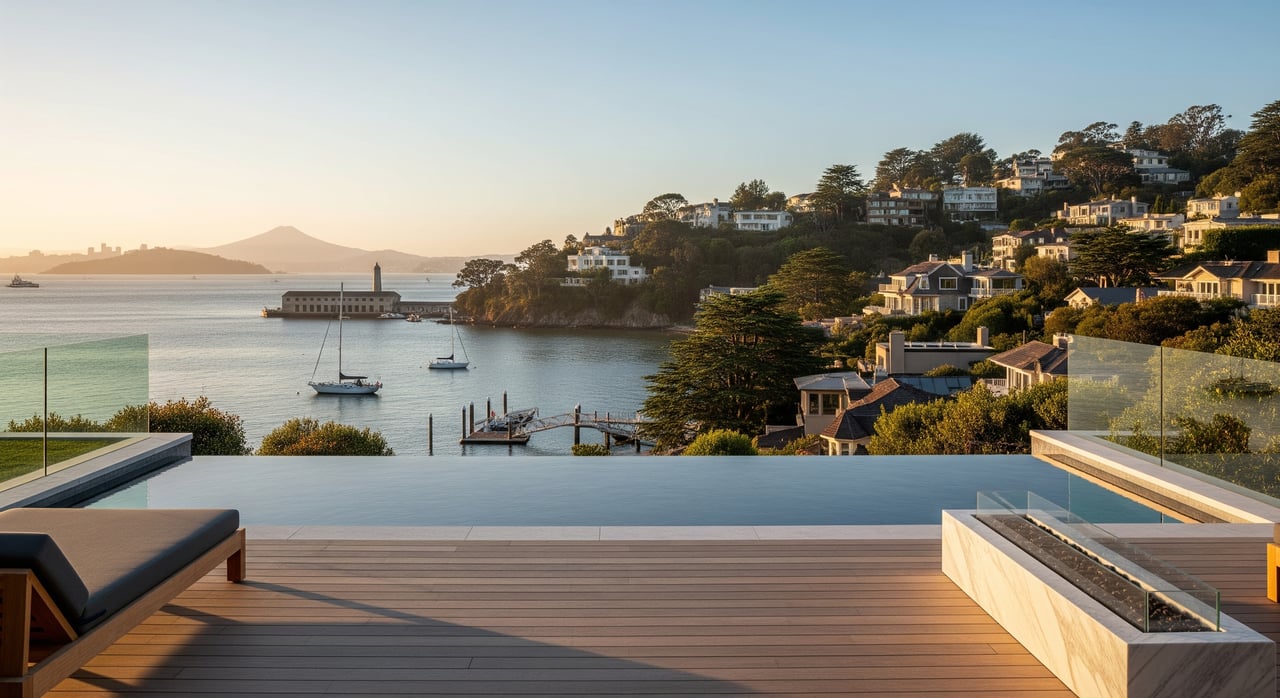
“Hillside” neighborhoods rise up from the shoreline across Tiburon and Belvedere Island. Elevation increases, driveways get steeper, and homes capture wider panoramas across the Bay, Angel Island, Mount Tam, and sometimes the Golden Gate. You gain privacy and sun on the right exposure, with fewer passersby and more space for terraces and landscaping.
Microclimates shift block by block. Orientation matters a great deal. A south or southwest-facing hillside home can feel significantly warmer than an east-facing waterfront property that gets morning sun and a brisk afternoon breeze.
Lifestyle tradeoffs
Views and vistas
Waterfront views tend to be immediate and close-in, with boats, piers, and the shimmer of the lagoon or harbor right out your window. Those views can include foreground activity and, in some spots, public paths or moorings. Hillside vantage points often deliver long-range panoramas across the Bay, especially along ridgelines or open exposures.
It is important to know that California law does not guarantee private view rights. Local design review, height limits, and any recorded view easements shape what is protected. On the hillside, future vegetation growth or construction on intervening lots can change view corridors over time.
Boating and marina access
If daily boating is central to your lifestyle, waterfront can be compelling. Tiburon and Belvedere feature yacht clubs, marinas, and mooring areas, and select shoreline homes include private docks or moorings. Permissions for private docks are limited and depend on environmental and shoreline regulations, so never assume a dock is allowed even if neighbors have one.
Slips and moorings are scarce and often subject to wait lists or membership rules. If boating access is essential, verify marina options, club requirements, and any ongoing maintenance or association fees before you buy.
Wind, fog, and sun
Waterfront parcels often feel cooler and windier, especially in the afternoon when bay breezes pick up. Morning marine layer can be common in summer. Hillside homes vary more: ridgelines can be exposed and windy, while sheltered slopes feel calmer and warmer. Orientation drives the experience. A south-facing hillside deck can be a sun trap, while an east-facing shoreline patio may lean cool and breezy by late day.
Privacy and street life
Waterfront areas near downtown typically have more foot traffic. Public paths, parks, and restaurant activity add vitality but can reduce privacy if your property sits near the shoreline. Hillside streets are quieter with fewer pedestrians, greater separation between homes, and room for private terraces and gardens.
Walkability and errands
If you value walking to coffee, dining, the ferry, or waterfront events, the downtown-adjacent waterfront blocks shine. Many hillside residents rely more on short drives for groceries and transit. Some hillside areas have narrow or steep roads and limited sidewalks, which can matter for strollers or mobility needs.
Parking and property access
Waterfront lots are generally flatter with simpler driveway access. That said, on-street parking near Main Street can be tight during peak times and events, and some shoreline parcels have limited garage capacity due to lot size. Hillside properties often feature steeper driveways, switchbacks, stairs, and multi-level layouts. In wet weather or with longer vehicles, access can feel more complex.
Pricing and resale
Waterfront and Belvedere addresses have historically commanded the highest per-square-foot values on the peninsula, driven by prestige, scarcity, and direct water adjacency. The very best waterfront sites can sell quickly when priced correctly, though specialized features like historic structures or complex dock situations can narrow the buyer pool.
Hillside homes often deliver dramatic views at a lower price point than absolute waterfront. This can create strong value for buyers who prioritize panoramas, privacy, and usable outdoor space. Demand for hillside properties tends to be broad, appealing to families, downsizers, and remote professionals.
On resale, waterfront desirability and limited supply support long-term value. However, luxury coastal properties can be more sensitive to market shifts and climate risk perceptions. Waterfront ownership also often carries higher ongoing costs, including shoreline maintenance and insurance, which factor into net proceeds. Hillside properties can be more flexible for remodels or additions, subject to permits and geotechnical constraints. Their main resale sensitivities include driveway and parking complexity and potential view changes without easements.
Risk, regulation, insurance
Flood and sea level
Low-lying shoreline parcels face higher exposure to tidal flooding today and to future sea-level rise. Shoreline improvements like seawalls, bulkheads, and docks typically require multiple approvals, and permitting can be time-consuming and costly. Lenders may require flood insurance for properties within FEMA flood zones, and premiums and availability can change. If you are evaluating a waterfront home, review flood-map status, past flood claims, and the maintenance history and ownership responsibility for any seawall or shoreline structure.
Wildfire and geotechnical
Hillside areas in Marin have notable wildfire considerations, and evacuation logistics on narrow or steep roads add to planning. CAL FIRE and County resources identify hazard severity zones and defensible space requirements. Geotechnical conditions also matter for hillside homes. Soils reports, drainage performance, retaining walls, and foundation stability can affect insurability, lending, and permitting for future improvements.
Design review and HOAs
Tiburon and Belvedere both have active planning and design review for additions, exterior changes, and height. In visually sensitive or historic areas, review may be more extensive. Some blocks or associations manage shared seawalls, docks, or private roads. Always review CC&Rs, easements, and any shared-cost structures that could lead to assessments.
Due diligence checklist
If you are buying waterfront
- Shoreline and seawall condition report from a marine-structure engineer
- Mooring or dock permits and maintenance records, plus slip or club availability and rules
- FEMA flood zone status, past flood or storm damage, and any insurance claim history
- Title review for public access easements or path rights along the shoreline
If you are buying hillside
- Geotechnical report on slope stability and soils, including recommendations for foundations or retaining walls
- Drainage evaluation and stormwater management review
- Wildfire defensible space inspection and local mitigation requirements
- Access assessment for driveway grade, turning radius, and emergency vehicle approach
For any property
- Home inspection, pest inspection, roof and foundation evaluations
- Sewer or septic verification, utility and broadband options, and recorded easements
- Review of local design review requirements, height limits, and any view easements or restrictions
How to choose your fit
Start with your daily rhythm. If you want the ferry, cafes, and waterfront walks at your doorstep, a shoreline block near downtown may be ideal. If you envision sunny afternoons, privacy, and broad panoramas for indoor-outdoor living, a south or southwest-facing hillside may fit better. Think about your tolerance for wind and fog, your parking and access needs, and whether boating access is essential or simply a nice-to-have.
Use a structured approach:
- Visit candidate homes at different times of day to experience wind, sun, and fog.
- Stand in key rooms and outdoor areas and test the view lines seated and standing.
- Driveways matter. Test approach, turning, and garage access with your vehicle.
- Ask for disclosure packages early. Review reports, permits, and claims history.
- Consider your likely resale audience. Waterfront often targets boaters and buyers seeking prestige and walkability. Hillsides appeal broadly to view seekers, families, and remote workers.
When you want an experienced perspective on risks, permits, pricing, and negotiation, a seasoned local advisor can help you focus on the right properties and protect your position through due diligence and contract contingencies.
Ready to explore the right fit on the Tiburon peninsula with discretion and rigor? Connect with Stephanie Lamarre for a private consultation tailored to your goals.
FAQs
What defines waterfront vs hillside in Tiburon and Belvedere?
- Waterfront generally means lower-elevation shoreline or lagoon areas near marinas and Main Street, while hillside refers to higher-elevation residential streets rising up the slopes and ridgelines.
How does sea-level rise affect Tiburon waterfront buyers?
- Low-lying parcels face higher tidal flood exposure and potential future adaptation costs, and lending may require flood insurance depending on FEMA flood zone status.
What due diligence should I prioritize for Tiburon hillside homes?
- Obtain a geotechnical report, drainage review, and wildfire defensible space assessment, and confirm driveway access, retaining walls, and foundation conditions.
Is walkability better near downtown Tiburon waterfront areas?
- Yes, the blocks around Main Street are typically the most walkable to shops, dining, the ferry, and seasonal events compared with steeper hillside streets.
How do docks and marina slips work for Tiburon waterfront homes?
- Some homes have private docks subject to permits and maintenance, while marina slips and moorings are limited and may involve wait lists or membership rules.
Which has stronger resale in Tiburon, waterfront or hillside?
- Waterfront often commands top prices due to scarcity and prestige, while hillside homes offer broader buyer appeal and strong value for panoramic views at lower price points.