What is a Tiburon view really worth? If you are buying or selling in Belvedere or Tiburon, you already know the Bay, bridge, and skyline can be the deciding factor. You also know not all views are equal. In this guide, you will learn how appraisers define and quantify a view, what the research says about premiums, which Tiburon view corridors matter most, and how to price or evaluate a view with confidence. Let’s dive in.
Why views move the Tiburon market
Tiburon and Belvedere sit in a luxury bracket where many homes trade in the low to mid single‑digit millions, with Belvedere Island often higher. In this range, the view from your primary rooms can shift outcomes in meaningful ways. The most successful pricing and negotiation focus on micro‑markets like Belvedere Island, Red Hill and Ridge, Beach Road, and the Lagoon. That is why you should compare against recent solds from the same sub‑neighborhood and time window.
What counts as a “view” in an appraisal
Appraisers use a standard framework to describe and adjust for views. Under the UAD guidance used by Fannie Mae and Freddie Mac, appraisers label the overall view rating and identify view factors such as water, skyline, or mountain, then explain any adjustments when the subject and comparables differ. You can read how this is handled in the Freddie Mac UAD FAQs.
In practice, appraisers lean on the sales comparison approach. They extract adjustments from market data using paired sales, market extraction, or statistical models. The profession’s core reference, The Appraisal of Real Estate, outlines these methods and tests of reasonableness. If an adjustment is large, it must be supported and explained with multiple comparables. For background, see the Appraisal Institute’s text and this overview of extraction and reporting in a sample appraisal presentation and related practice notes.
How much can a view add?
Academic and applied studies agree that views are capitalized into price, with wide variation by type and quality. Research shows that high‑quality panoramic water or landmark views often carry premiums in the high single digits to low 30 percent range, with rare, iconic cases even higher. Partial or distant skyline views tend to be in the low single digits. The key is local extraction, since lot, architecture, access, privacy, and waterfront rights can be just as influential. For the evidence base, see studies summarized in Environmental and Planning A and coastal market findings in applied housing research.
Tiburon’s signature view corridors
Not all Tiburon outlooks read the same to buyers. The market tends to distinguish these corridors:
- San Francisco skyline. Night lights and a clear silhouette attract buyers on higher Tiburon ridgelines and select Belvedere hilltops.
- Golden Gate Bridge and the western Bay. Unobstructed bridge views from main living areas are especially prized.
- Angel Island and Raccoon Strait. Close‑in water activity with a broad horizon offers daily interest and calm water outlooks.
- Richardson Bay, Sausalito, and Belvedere Lagoon. Closer water, marinas, and lagoon life appeal to maritime‑lifestyle buyers and differ from far‑reach panoramas.
Local topography determines which corridor a property captures, and from which rooms. Primary living spaces with wide outlooks tend to trade best.
Waterfront vs. hillside vistas
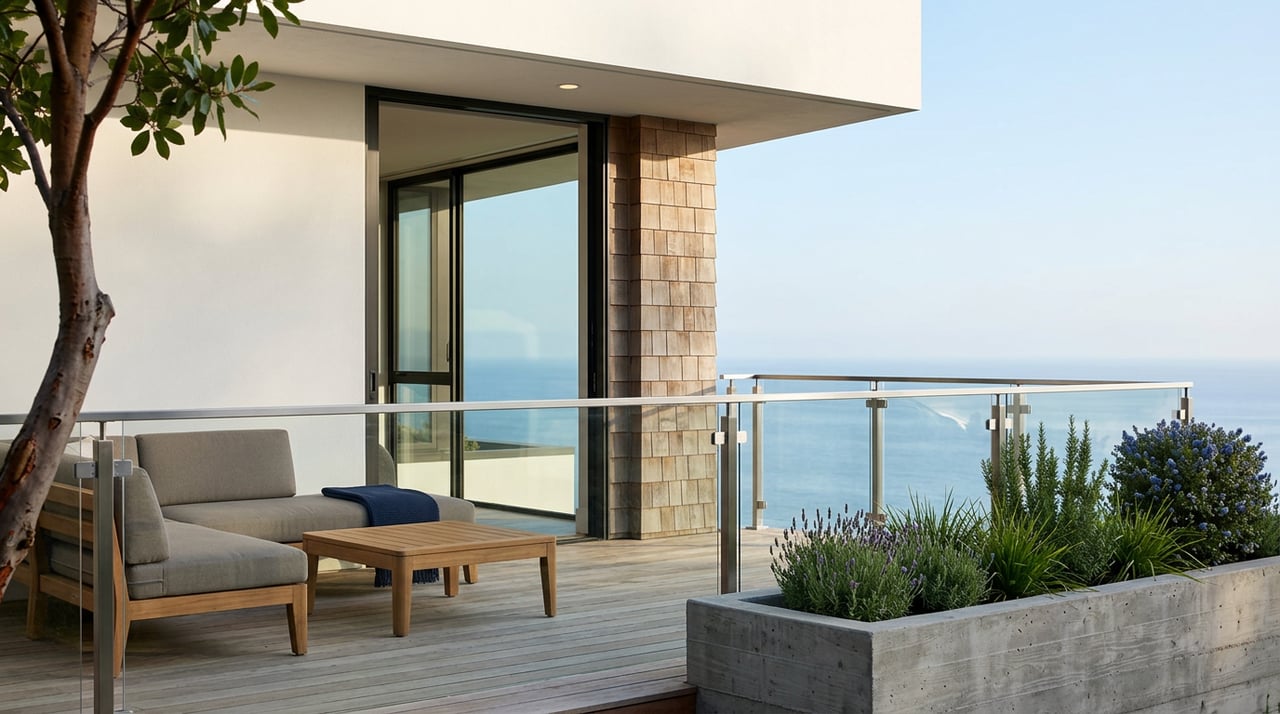
Treat waterfront access and a water view as separate contributors to value. A private dock or direct waterfront is a concrete amenity with its own market impact. The visual amenity of a skyline, bridge, or open water view is distinct. In pricing and appraisals, each is adjusted separately. Homes that combine both, such as waterfront with panoramic bridge and city views, can see a compounding effect.
What recent sales tell you
Local examples illustrate how the market prices view quality:
- 5 Palmer Ct sold in early 2024 with Golden Gate, San Francisco skyline, and Angel Island outlooks. It helps frame the mid‑$3M bracket for view‑oriented homes in that period.
- 333 Bella Vista Ave, a contemporary home with sweeping Angel Island and Raccoon Strait views, shows how modern architecture that frames a view can command a premium.
- 18 Golden Gate Ave on Belvedere Island, with lagoon and Angel Island aspects, highlights how consistent water or lagoon outlooks draw a different buyer set than wide hillside panoramas.
- Ultra‑luxury waterfront on Belvedere Ave demonstrates the layered premium when private dock rights combine with panoramic bridge and skyline views.
Use these only as directional cues. The value of your specific outlook depends on your sub‑market, recent comps, and which rooms capture the view.
Seller checklist: pricing a Tiburon view
Use this step‑by‑step to support a defensible list price:
- Identify the primary corridor. Golden Gate, skyline, Angel Island, Richardson Bay, or Lagoon. Note which primary rooms and decks capture it.
- Pull the right comps. Focus on the same sub‑neighborhood and a recent window. Filter for view in MLS and compare price per square foot and total price across 3 to 5 sales. Appraisers favor close‑in, recent comps under UAD guidance.
- Seek paired sales. Look for similar homes where the main difference is the view. Use the price gap to estimate a local view adjustment. When perfect pairs do not exist, apply market extraction across several comparables and document the support. See the paired‑sales approach overview.
- Adjust for confounders. Lot size, dock or waterfront rights, remodel level, outdoor usability, privacy, access, and exposure to wind or noise can explain as much value as the view itself. Academic work on amenity trade‑offs supports this point in applied housing research.
- Market the view with intention. Show the outlook from main living spaces at different times of day, label rooms that feature the view, and describe scope with clear terms like unobstructed, panoramic, or partial.
Buyer checklist: evaluating a view premium
- Ask for isolating comps. Request recent sales that differ mainly by view quality within the same micro‑market.
- Order a supported appraisal. Ask the appraiser to show how any view adjustment is derived using paired sales or extraction, per UAD expectations.
- Verify where the view lives. Confirm which rooms offer the outlook at seated and standing eye level and whether it is best indoors or only from an upper deck.
- Assess future view risk. Consider tree growth, neighbor build‑out, and shoreline adaptations that could alter character over time.
A quick way to estimate a local premium
You can approximate a view adjustment with a simple two‑step:
- Step A. Find two recent closed sales in the same sub‑market and size band where the major difference is the view. Compute the percentage difference as (price with view minus price without view) divided by price without view. Treat it as a directional estimate.
- Step B. If no clean pair exists, average price per square foot for recent sales with similar views and for sales without, then apply the difference to your home’s size while adjusting for lot and condition. Always label this as an estimate and confirm with a professional. For context on extraction, see this appraisal methods overview.
Long‑term risks and legal protections
- Sea‑level rise and shoreline adaptation. Waterfront and near‑shore properties sit within regional planning for sea‑level rise. Permitting, adaptation projects, and potential costs should be part of your long‑term view of value. For regional policy and planning, review the San Francisco Bay Plan.
- View rights. There is usually no general legal right to a view unless a recorded easement, CC&R, or local rule creates it. Always check title documents, CC&Rs, and applicable ordinances. For a consumer overview, see Nolo’s legal reference.
Presenting your view to maximize value
Small choices can elevate perceived value:
- Lead with the outlook from main living areas, then secondary spaces.
- Use clear, unambiguous language that matches appraisal terms. Example: panoramic Bay and bridge view from great room and primary suite.
- Sequence dusk, daylight, and morning photos to show how the view performs across the day.
- Frame sightlines in person. Open doors, clear railings, and set seating to showcase seated eye‑level horizons.
When stakes are high, a disciplined plan pays off. For a private strategy on pricing, presentation, and targeted exposure, connect with Stephanie Lamarre.
FAQs
What types of Tiburon views add the most value?
- Panoramic water and landmark views, especially Golden Gate Bridge or wide Bay outlooks from primary rooms, often command the largest premiums, while partial or distant views usually add less.
How do appraisers measure and adjust for a home’s view?
- They rate overall view quality, identify view factors, and use market evidence to adjust differences between the subject and comparables as outlined in Freddie Mac’s UAD FAQs.
What is the difference between waterfront access and a water view in pricing?
- Waterfront or dock rights are a hard amenity with their own contributory value, while a water view is a visual amenity; appraisers analyze and adjust them separately.
How can I estimate my home’s view premium before listing in Tiburon?
- Start with paired sales in your micro‑market, compute a simple percentage difference, and refine with several comps using market extraction; confirm with an appraisal or broker analysis.
Do local laws in Tiburon or Belvedere protect my view?
- In most cases there is no automatic right to a view; only a recorded easement, CC&R, or specific rule can protect it, so review title and consult local regulations.
Will sea‑level rise affect the value of waterfront homes with views?
- Waterfront properties should be evaluated in light of regional planning and potential adaptation projects detailed in the San Francisco Bay Plan.